
Driving to the Alps
When travelling in European Countries you are obliged to have the following:
Although not required by Law, the following items may prove to be useful:
Click here for our range of Travel Accessories or on the above links.
Please Click here to see European Driving Requirements . This is a list of the equipment that it is recommended and compulsory by law to carry in your vehicle when travelling through European countries.
French Speed limits
Motorways 130km/h - 81mph reduced in wet weather to 110km/h - 68mph.
Dual Carriageways 110km/h - 68mph reduced to 90km/h - 55mph.
Built up areas 50km/h - 31mph.
Outside Built up areas 90km/h - 55mph.
Due to new legislation in France. If you are caught speeding over 150km/h, the police have the right fine you, add points to you licence and impound your vehicle.
Driving in the Alps
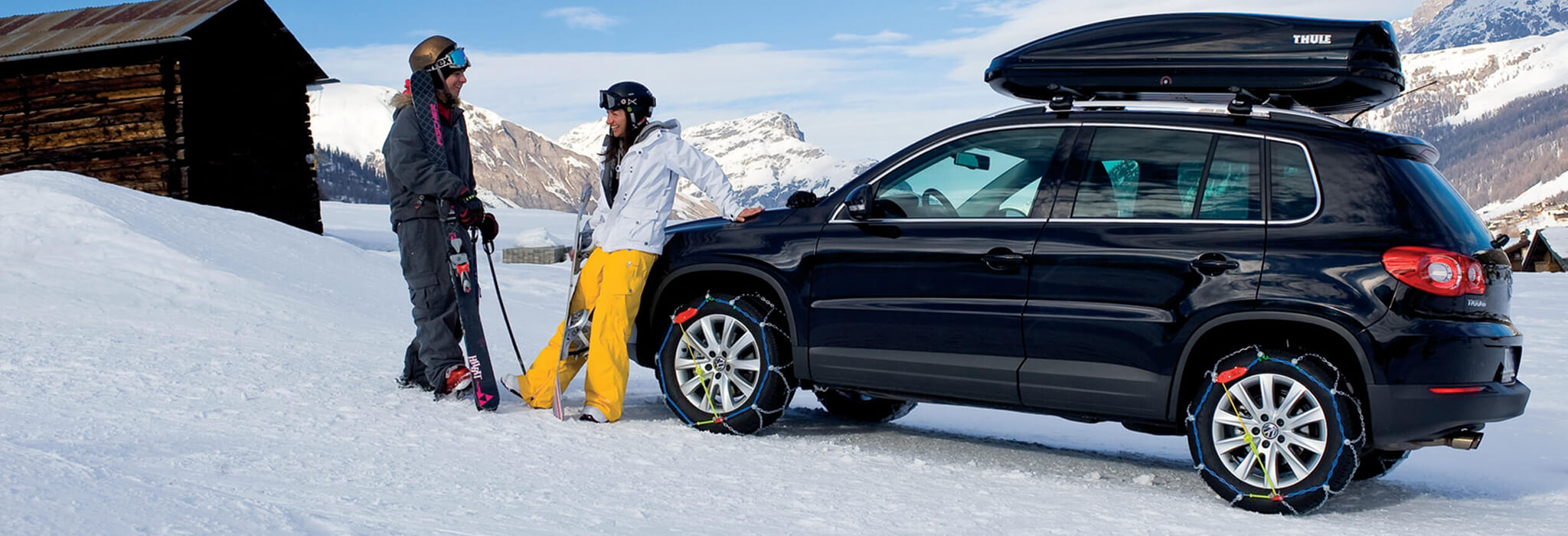
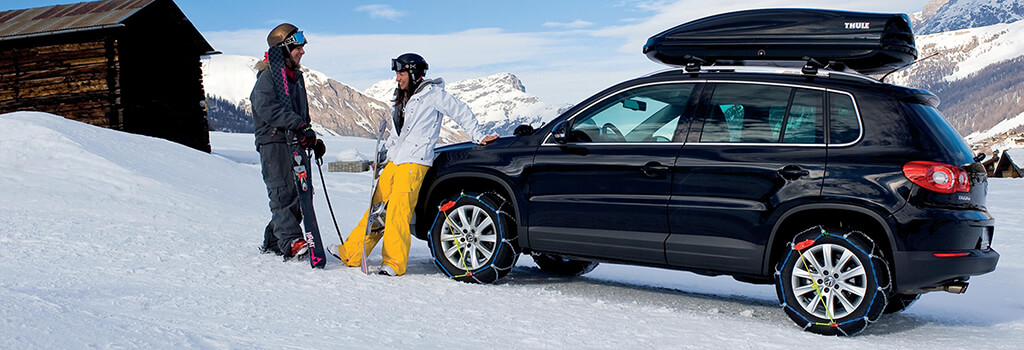
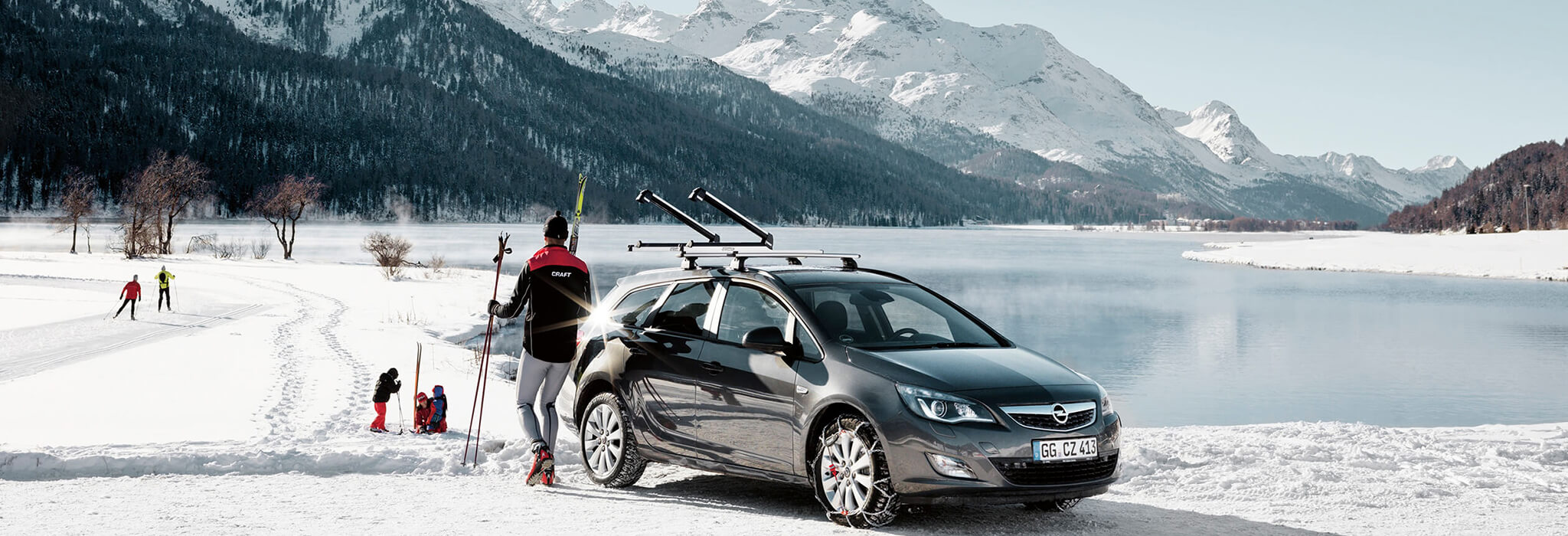
You are required by law to carry snow chains on most Alpine roads. In practice, the police are sometimes lenient with 4 x 4s, but we know from experience that they do usually enforce the law. If you haven't got snowchains you'll be sent back down the mountain. You'll appreciate the security that snow chains offer when you get to the steep bits!
If you've never used snowchains before, you should practice putting them on. When it's snowing, windy and freezing cold outside you will want to get them on as quickly as possible.
(You can either hire or buy from us. If you hire, and
then buy within twelve months, we'll refund the Hire element of the total
hire charge. Note that we don't refund Carriage charges.)
Two alternatives to Snow Chains
Autosock - An astonishing new development in ice and snow traction. AutoSocks are textile wheel covers which you just slip over the driving wheels when things look slippy. "Yes - it really is this easy" and "Yes, of course they work!"
Although ideal for UK use, it's possible that AutoSocks will not be recognised by the Alpine 'snow chain police', so take chains on your ski drive holiday if they're available.
Spikes Spider - If you can't use a snowchain, they will be just what you need!
Safe Winter Driving
In a rear-wheel drive vehicle, you can usually feel a loss of traction or the beginning of a skid. There may be no such warning in a front-wheel drive, however. Front-wheel drives do handle better in ice and snow, but they do not have flawless traction, and skids can occur unexpectedly. Don't let the better feel and handling of a front-wheel drive car cause you to drive faster than you should.
Despite a popular misconception, the best approach to recovering from a skid is the same for foth front and rear-wheel drive vehicles.
If your rear wheels start to skid:
If your front wheels skid:
To avoid skids, brake carefully and gently on snow or ice. "Squeeze" your brakes in slow, steady strokes. Allow the wheels to keep rolling. If they start to lock up, ease off the brake pedal. As you slow down, you may also want to shift into a lower gear.
The information above was reprinted from pages 76-78 of the New York State Department of Motor Vehicles Driver's Manual.
Driving down hills can be the worst, stay in low gear and at a a low speed. Try slowing down by using the engine, keep braking to a minimum. If you do start to slide follow the above advice.
Preparing your Car for Winter Driiving
When parking, leave the car in gear and the hand brake off. Use wheel chocks if you have them.
Any questions please call us on 08700 766326 and we'll do our best to help.
>>
Click here to go to the Snow Chains home page
>> Click here
to return to the top of the page
<<
Back to previous page